


Solitaire Card Game
4.82.88K Reviews
App Specs
- Version
- 2.4.10
- Updated On
- License
- Free
- Downloads
- 5,000,000+
- Developer
- Degoo ltd
- Categories
- Card
- Platform
- Android
Screenshots
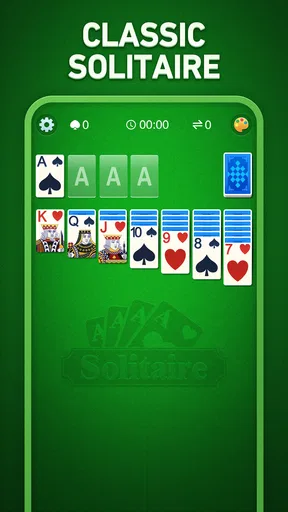
 Analysis by AppCompare
I tend to return to card games when I want something engaging without the pressure of a timer, a complicated story, or a long learning curve. Solitaire Card Game from Degoo ltd fits that mood well. It is a free card game built around familiar solitaire play, with an emphasis on relaxed sessions and offline use. My overall view is simple: this is a practical, low-pressure solitaire choice for quiet moments, especially if you want to train your attention without needing an internet connection.
That recommendation comes with a qualification. This is not the best pick for someone searching for a deep collection of competitive card modes, social interaction, or a highly elaborate presentation. Its appeal is narrower and more focused. It works because it keeps the central activity easy to start and easy to pause. If that sounds like exactly what you need, the game is worth considering; if you want constant novelty, it may feel limited sooner.
How the game feels in everyday use
The first thing I noticed is how naturally the game fits short breaks. I can imagine opening it while waiting for an appointment, sitting on a train, or taking a few minutes away from work. Solitaire does not demand the kind of uninterrupted attention that a strategy game or action title usually needs. I can think through a move, put the phone down, and come back to the same kind of calm mental exercise later.
That makes the offline design more than a minor convenience. A card game that works without a connection is useful in places where streaming, multiplayer features, or cloud-dependent games become awkward. It is also a better match for people who want to keep mobile entertainment simple. Rather than turning a break into another feed to scroll through, I get a contained puzzle with a clear beginning and end.
The store summary presents it as a way to relax and train the brain, and that description matches the experience more closely than a claim about intense challenge would. Solitaire asks me to look ahead, recognize available moves, and avoid wasting useful cards. The mental effort is real, but it stays gentle. Some deals are more satisfying than others, and that variation is part of the reason I can play for a few minutes without feeling that every session has to become a serious test.
It is also an accessible choice for older players. The content rating is Everyone, and the rules are familiar enough that a person who already knows traditional solitaire can start without studying a complicated tutorial. For someone new to the format, the basic goal is still approachable: organize the cards through careful decisions rather than fast reactions. That makes the game suitable for mixed-age households where not everyone wants the same kind of mobile entertainment.
Degoo ltd has kept the identity of the game straightforward. The short description calls it a solitaire card game, and that plain wording is useful because it sets the right expectation. I would not install it expecting a role-playing layer, a campaign, or a collection of unrelated diversions. I would install it because I want solitaire available on my phone, with the option to play when I am offline.
Worth Reading Before You Choose

EA SPORTS FC Mobile 26 Is a Bigger Football Game, but It Takes Time

Flipboard Shows What News Apps Must Do Beyond the Feed

Switching to Android Auto Means Rethinking Your Driving Routine

Google Calendar Makes a Crowded Week Easier to Manage

Ludo King Makes the Most of the Minutes Between Plans

Baby Panda World Brings Quick Play to Modern Phones, but Its Game Library Feels Busy
Why the simple format works
Solitaire succeeds or fails on small decisions. A tempting move can open a useful column, but it can also remove the flexibility needed later. I enjoy that the game rewards patience more than speed. Even when I am not playing brilliantly, I can usually understand why a position became difficult. That clarity makes the losses feel less irritating than defeat in a competitive game where another player, a ranking, or a fast reaction may be the main factor.
There is a useful rhythm to a short session. I scan the layout, identify the moves that reveal hidden cards, and try not to commit too quickly to the first available option. When I have only a few minutes, I can still make meaningful progress. When I have longer, I can slow down and examine the consequences of each move. This flexibility is one of the strongest reasons I would recommend it for casual use.
A practical tip is to treat each opening move as a question rather than an automatic action. I try to prioritize moves that uncover information or create room, instead of immediately moving every card that appears possible. That habit makes the game more thoughtful and helps prevent the common mistake of using a helpful-looking move that leaves no useful follow-up.
Another useful approach is to reserve attention for blocked areas. In a relaxed game, it is easy to focus on the cards already visible and overlook the value of exposing what is underneath. I find that planning around hidden cards gives the session more structure. It also turns the game into a modest exercise in sequencing, rather than simple card movement.
These details are not flashy features, but they are why the game can remain pleasant after the novelty of opening it for the first time has passed. The enjoyment comes from the decisions, the quiet pace, and the small satisfaction of improving a difficult layout. Players who appreciate familiar rules with room for better habits will probably get more from it than people who need constant rewards or dramatic changes.
Offline play changes where it is useful
The offline focus gives this particular game a clear place in my phone library. I can use it during travel, in areas with unreliable reception, or when I simply do not want an app depending on a live connection. That is especially helpful for a game whose core activity does not need other players. Solitaire is naturally suited to local play, so keeping it available away from the network feels appropriate rather than restrictive.
It also makes the game a reasonable option for a device used by someone who prefers uncomplicated apps. A parent or older relative may want a familiar pastime without the distractions associated with social games. In that situation, the card format is less intimidating than a large game with many menus and systems. The Everyone rating reinforces that broad accessibility, although the real test for any player will still be whether the card layout feels comfortable on their screen.
For a realistic daily routine, I would use it as a transition activity. After finishing a task, I might play one session before returning to the day, rather than opening a game that encourages me to keep chasing another level. The fact that solitaire has a recognizable structure helps me stop. I know I am playing a hand, not entering an endless stream of content.
That same quality may disappoint users who expect a strong sense of progression. A traditional solitaire game can be satisfying without giving me a character, a world, or a long-term objective. If I need visible milestones to stay interested, I would probably look at a more feature-heavy card app instead. This game’s strength is its restraint, and restraint can feel like a lack of ambition when compared with larger alternatives.
What the adoption figures suggest, and what they do not change
The game has reached over five million installs, with an average rating of 4.8 from around thirty-six thousand ratings and roughly two thousand nine hundred written reviews. Those figures suggest that its uncomplicated approach has found a substantial audience. I see them as useful reassurance that the basic concept works for many players, but I would not treat popularity as proof that it will suit every preference.
In my experience, solitaire apps often attract positive reactions because they solve a very specific problem: they provide a familiar activity with almost no learning barrier. That appears to be the role this game occupies. Its audience is likely to value reliability and ease more than a large feature list. The numbers support that positioning, but the decision still depends on whether I want a calm card session or a broader game experience.
The game is free, which lowers the risk of trying it. I can test whether the card presentation and pace work for me without making a purchase first. That matters for people choosing an app for an older family member, because comfort with the layout is difficult to predict from a description alone. A free download makes that trial practical.
At the same time, “free” does not automatically mean frictionless. Any free mobile game can be judged by how comfortable it feels during repeated use, not just by the initial installation. I would pay attention to whether the presentation remains easy to read, whether the controls feel natural, and whether the game gives me enough variety to justify keeping it. Those are the everyday questions that matter more than the download decision itself.
The main weakness: a focused game can become repetitive
The most meaningful limitation is the narrow scope. Solitaire is the whole reason to open the app, and that is both its appeal and its ceiling. If I play it frequently, I may start wanting more variation than a straightforward card game can provide. Players looking for multiplayer matches, social interaction, elaborate challenges, or several distinct card formats should compare it with a broader alternative before settling in.
This is also not a game I would recommend to someone who dislikes slow, deliberate play. There is no need to react quickly, and the satisfaction comes from considering options rather than from constant movement. A person who prefers action, competition, or a strong reward loop may find the experience too quiet. That is not a flaw in the rules, but it is a genuine mismatch for a certain kind of player.
Another trade-off is that familiar solitaire can make mistakes feel personal. When a hand becomes impossible or awkward, I may wonder whether I missed a better sequence earlier. That can be rewarding when I want to improve, but mildly frustrating when I am using the game purely to relax. My solution is to treat each hand as a short mental exercise instead of expecting every session to end in a win.
I would also be selective about recommending it as a brain-training tool. The game encourages attention, planning, and pattern recognition, but it should not be treated as a substitute for a structured educational program or a medical intervention. Its benefit is more modest and practical: it gives me a reason to concentrate for a while in a familiar format. That is valuable, but it should be described honestly.
Who should install it
I think the strongest audience is anyone who wants a free offline card game for short, quiet sessions. It suits people who already enjoy solitaire, users who want something uncomplicated, and players who prefer a game that can be picked up without a long tutorial. It is also a sensible option for older adults who recognize the rules and want a straightforward pastime on a mobile device.
I would recommend it to a friend who travels often and wants a game that does not depend on a connection. I would also suggest it to someone trying to replace aimless phone scrolling with an activity that has a defined structure. The game is especially useful when the goal is not excitement but a small pause that still keeps the mind occupied.
The current version is 2.4.10, and the minimum operating system is Android 6.0. That makes it accessible to people using older Android hardware, which is important for a simple game intended for a broad audience. A person with an aging phone may not want to install a demanding modern title just to enjoy a few minutes of cards. Here, the compatibility requirement is relatively modest.
I would skip it if my priority were competitive play, a large multiplayer community, or a wide selection of card variants. I would also look elsewhere if I wanted a strong progression system that constantly unlocks new content. A larger card suite may be better for those needs. The right comparison is not whether this game has everything; it is whether I want a dependable solitaire tool or an expansive card platform.
For someone deciding between this and playing solitaire in a browser, the offline advantage gives this app the more convenient role. A browser option may be useful for occasional access, but an installed game is easier to reach when there is no connection or when I want a more dedicated space for the activity. On the other hand, a browser or multi-game app may be preferable if I want to switch among several formats rather than stay with solitaire.
Small habits that make sessions better
I get more enjoyment from the game when I decide in advance what kind of session I want. If I have only a short break, I focus on making careful opening choices instead of trying to finish at all costs. If I have more time, I use the hand to practice looking several moves ahead. This prevents the game from feeling like a test I must complete and turns it into a flexible routine.
It also helps to avoid moving cards simply because a legal move is available. The most visible choice is not always the most useful one. I try to ask whether a move reveals a hidden card, opens a column, or preserves future options. This is a small but important shift: the game becomes less about clearing the screen immediately and more about protecting flexibility.
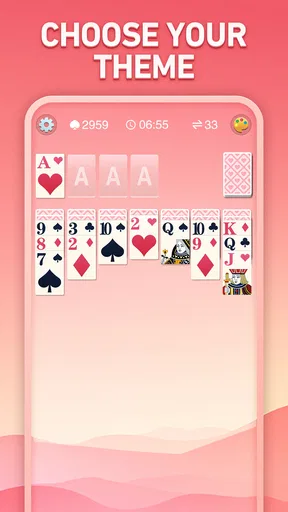
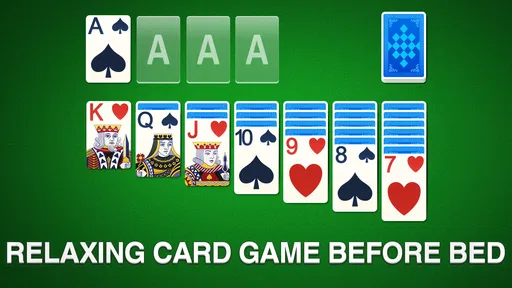
When playing on a phone, I would choose a comfortable viewing position and avoid rushing taps. Solitaire rewards accuracy, and a hurried touch can make a calm session unnecessarily annoying. If I were setting it up for an older player, I would spend a little time checking that the card layout is easy to follow before assuming the game will be comfortable. Familiar rules do not remove the importance of readable presentation.
Finally, I would keep expectations realistic. Some sessions are satisfying because the solution becomes clear; others are mainly useful as a few minutes of concentration. The game works best when I accept both outcomes. Expecting every hand to provide a dramatic victory would make a deliberately gentle experience seem more disappointing than it is.
My verdict after weighing the trade-offs
Solitaire Card Game is a focused, accessible card game that earns its place through convenience rather than spectacle. Degoo ltd has chosen a familiar format, kept the experience suitable for an Everyone audience, and made offline play central to its usefulness. The free price and broad Android compatibility make it easy to try, while the strong average rating and substantial install base show that many players appreciate this uncomplicated approach.
I recommend it to people who want a calm solitaire session during travel, waiting time, or a break from more demanding apps. I would especially point it toward users who value familiar rules, low pressure, and the ability to play without a connection. It is a good everyday companion when I want to think a little without committing to a large game.
My reservation is equally clear: the focused design will not satisfy everyone. Players who need social features, competition, several card modes, or a rich progression system should choose a broader alternative. For everyone else, the narrow purpose is a benefit. I would install it expecting a simple, repeatable card pastime—not a complete gaming universe—and under that expectation, it does its job well.
Pros
- Simple rules make it easy for beginners to start playing.
- Offline mode lets you enjoy games without an internet connection.
- Short rounds are convenient for quick breaks or commutes.
- Multiple difficulty levels provide a gradual challenge.
- Card animations and sound effects make games feel more engaging.
Cons
- Frequent ads may interrupt play
- especially between rounds.
- Some features may require in-app purchases or a premium upgrade.
- Random deals can occasionally feel repetitive over time.
- Small cards may be difficult to read on compact phone screens.
- Battery usage can increase during longer sessions with animations enabled.
FAQs for Solitaire Card Game
What is Solitaire Card Game, and how is it played?
Solitaire Card Game is a digital version of the classic single-player card game, usually based on Klondike Solitaire. The objective is to arrange cards into foundation piles by suit, beginning with the ace and continuing upward to the king. Cards can be moved between tableau columns in descending order with alternating colors, while face-down cards are revealed as you progress.
Can I play Solitaire Card Game without an internet connection?
In most versions, Solitaire Card Game can be played offline after installation, making it suitable for travel, commuting, or areas with limited connectivity. However, certain features may require an internet connection, including advertisements, cloud synchronization, online leaderboards, daily challenges, statistics backup, or in-app purchases. Availability can vary depending on the specific version and device.
Is Solitaire Card Game free to download and play?
Solitaire Card Game is generally free to download, but the free version may include advertising or optional in-app purchases. Paid features can include ad removal, additional card designs, backgrounds, hints, undo options, or advanced game modes. Before downloading, users should check the store listing for pricing details and review whether subscriptions or one-time purchases are offered.
Does Solitaire Card Game include hints, undo options, or difficulty settings?
Many Solitaire Card Game versions provide helpful tools such as unlimited or limited undo moves, hints, auto-complete, and options to restart a deal. Some also offer several difficulty levels, scoring systems, timed games, and different draw modes, such as drawing one or three cards. These features make the game accessible to beginners while still offering challenges for experienced players.
Is Solitaire Card Game suitable for children and older players?
Solitaire Card Game is generally easy to understand and can be enjoyed by children, adults, and older players because it uses familiar rules and simple touch controls. Nevertheless, parents should review the app’s advertising, privacy policy, and any purchase options before allowing children to use it. Larger cards, adjustable layouts, and accessibility settings may also improve comfort for older users.


